


Coffee doesn't belong in the trash: How to use coffee grounds in the garden

Peter from Goriffee | May 5, 2026
Most of us start the morning with a cup of our favorite drink. However, when the coffee machine finishes and the cup is empty, material remains in the coffee filter or portafilter that usually ends up in the trash. Coffee grounds – often an underestimated "waste" – are actually a valuable source of nutrients that can transform your garden beyond recognition.
Using used coffee in the garden is not just a trend for eco-enthusiasts. It is a practical step towards sustainability and reducing biological waste in the household. Instead of buying industrial fertilizers in plastic packaging, you can use what you already have at home.
Why coffee grounds are a great fertilizer
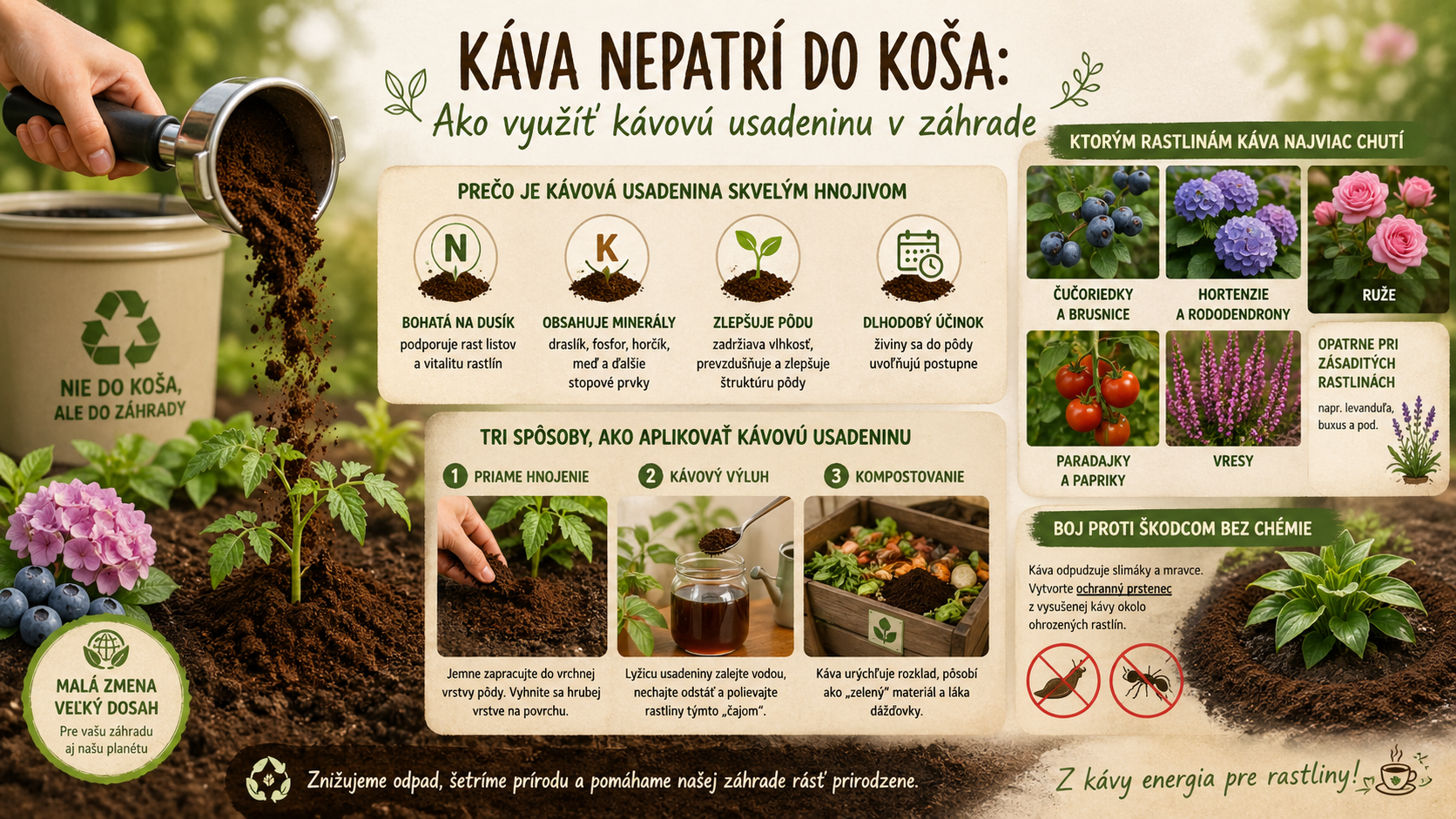
Used coffee is rich in nitrogen, which is a key element for leaf growth and overall plant vitality. Besides nitrogen, it also contains potassium, phosphorus, and important trace elements like magnesium and copper. These substances are released into the soil gradually, making coffee a long-lasting fertilizer.
In addition to its chemical composition, coffee also has mechanical benefits. It improves soil structure, helps it retain moisture better, and aerates it at the same time. This is especially appreciated by heavier clay soils, which become more pliable thanks to the coffee grounds.
Which plants like coffee the most
Although coffee is beneficial, it is not a universal solution for absolutely every plant. Coffee grounds have a slightly acidic pH, making them an ideal companion for acid-loving species. If you grow the following plants, they will love coffee:
- Blueberries and cranberries
- Hydrangeas and rhododendrons
- Roses
- Tomatoes and peppers
- Heathers
For plants that prefer alkaline soil (such as lavender or boxwood), we recommend handling coffee with care or composting it instead.
Three ways to apply coffee grounds
- Direct fertilizing: You can gently work the grounds directly into the top layer of soil around the plants. It is important not to leave a continuous thick layer of coffee on the surface, because after drying it can form an impermeable crust through which water cannot reach the soil.
- Coffee extract: Pour water over a spoonful of grounds and let it steep. You can water not only outdoor plants but also some indoor flowers with this "tea". It is a quick way to give them a dose of minerals.
- Composting: This is the safest and most effective method. Coffee in the compost acts as a "green" nitrogenous material. It accelerates the decomposition process and attracts earthworms, which further process and aerate the soil.
Pest control without chemicals
Besides nutrition, coffee also acts as a barrier. Its texture and smell repel some unwanted visitors. Snails avoid the rough surface of coffee grounds, and the strong aroma can confuse ants. If you have a problem with snails in your garden, try creating a protective ring of dried coffee around endangered plants.
Waste reduction in practice
Introducing coffee into your gardening routine is one of the easiest ways to practice a circular economy in the household. Every gram of grounds that does not end up in a landfill, but in the soil, contributes to lower methane production and better health for our planet. It is a small change with a big impact on your surroundings and the environment.

