Mythbusting: Coffee is unhealthy because of acrylamide
Erik Šimšík | 13. November 2019
In the summer, Markíza TV approached us with a request to talk about acrylamide and its content in coffee on the Reflex program. Today we are looking deeper into this topic and presenting more data and studies that didn't fit into the report.
What is acrylamide? It is a chemical substance that is formed when carbohydrates are exposed to high temperatures, usually 120°C or more (Maillard reaction). Acrylamide can therefore be found, for example, in fried and baked foods such as bread, potatoes, cereals, chips, biscuits, but also in coffee, because coffee also contains carbohydrates. Since acrylamide in large amounts causes cancer, its presence in large amounts in coffee would be a clear problem for coffee drinkers.
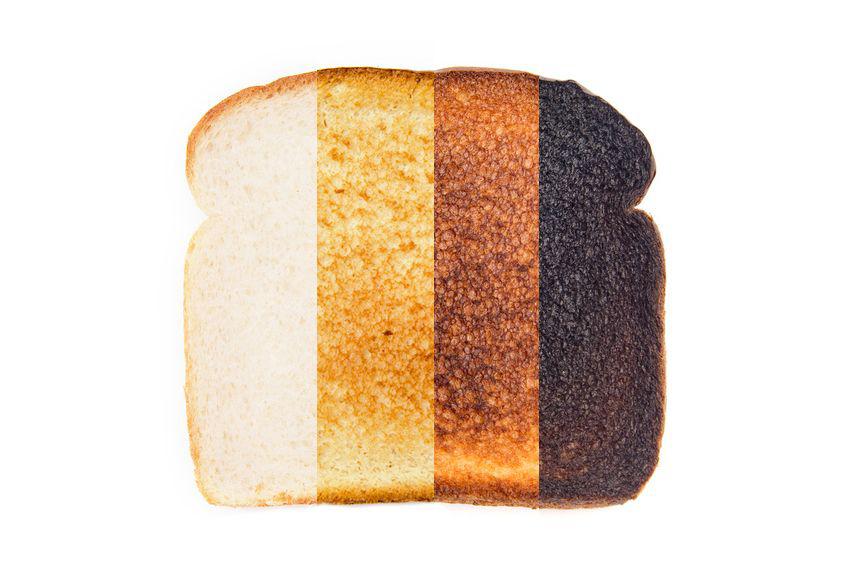
The rightmost darkest part (black) contains the most acrylamide.
So I started looking into this topic and found two interesting studies, which I will briefly summarize here. It turned out that the maximum allowable amount of acrylamide is 0,2 mg per 1 kg of body weight. The Polish National Food and Nutrition Institute tested 42 different types of coffee, beans, ground, instant, and coffee substitutes (such as chicory).
The most acrylamide was found in substitutes – 800 µg per 1 kg, but that is still 3 times less than the average value for potato chips and 8 times less than in butter biscuits.
In second place was instant coffee with 358 µg/kg, and in third place was coffee beans with 180 µg/kg.
Arabica vs Robusta: difference in content?
Scientists found that there is no difference in acrylamide content between Arabica and Robusta, and they also found a correlation that the darker the coffee is roasted, the significantly higher the proportion of acrylamides in it.
I also found an interesting number in research conducted by the Institute of Food Science, Technology and Nutrition in Madrid. Since no one drinks, for example, 20 g of coffee as such, but a beverage made from it, scientists from this institute checked how much acrylamide is directly in a cup of coffee. It turned out that this content was on average about 20 µg per liter of beverage.
I think it is very unlikely that anyone drinks even a liter of coffee a day, and even if they did, they would still be far from exceeding the maximum allowable amount of acrylamide.
So I think the myth has been busted.
Without a doubt (but only freshly roasted and freshly ground), we can still consider coffee a superfood loaded with antioxidants such as flavonoids or chlorogenic acid, but even caffeine itself is strongly antiseptic.
Watch the report in Reflex, where we also talk about acrylamide in coffee.
Erik from Goriffee
Co-founder of the Goriffee roastery. He is in charge of purchasing green coffee, its precise selection and final choice. He regularly visits coffee farms all over the world. He then uses his experience as a QC specialist in quality control and flavor profiling, thanks to which only the best specialty coffee reaches you.
Na ukladanie a/alebo prístup k informáciám o zariadení používame technológie ako cookies. Robíme to s cieľom zlepšiť zážitok z prehliadania a zobrazovať (ne)prispôsobené reklamy. Súhlas s týmito technológiami nám umožní spracovávať údaje, ako je správanie pri prehliadaní alebo jedinečné ID na tejto stránke. Nesúhlas alebo odvolanie súhlasu môže nepriaznivo ovplyvniť určité vlastnosti a funkcie.
Funkčné
Vždy aktívny
Technické uloženie alebo prístup sú nevyhnutne potrebné na legitímny účel umožnenia použitia konkrétnej služby, ktorú si účastník alebo používateľ výslovne vyžiadal, alebo na jediný účel vykonania prenosu komunikácie cez elektronickú komunikačnú sieť.
Predvoľby
Technické uloženie alebo prístup je potrebný na legitímny účel ukladania preferencií, ktoré si účastník alebo používateľ nepožaduje.
Štatistiky
Technické úložisko alebo prístup, ktorý sa používa výlučne na štatistické účely.Technické úložisko alebo prístup, ktorý sa používa výlučne na anonymné štatistické účely. Bez predvolania, dobrovoľného plnenia zo strany vášho poskytovateľa internetových služieb alebo dodatočných záznamov od tretej strany, informácie uložené alebo získané len na tento účel sa zvyčajne nedajú použiť na vašu identifikáciu.
Marketing
Technické úložisko alebo prístup sú potrebné na vytvorenie používateľských profilov na odosielanie reklamy alebo sledovanie používateľa na webovej stránke alebo na viacerých webových stránkach na podobné marketingové účely.