70% of your body and 98% of your coffee is made up of water. Without quality water, it is impossible to prepare coffee properly. Its composition therefore plays a key role in how your coffee will taste.
In this article, we will focus on the possibilities of water treatment in the home environment so that it is suitable for preparing the tastiest possible cup of coffee.
Hard or soft water?
Right at the beginning, unfortunately, we have to disappoint you, because neither hard nor soft water is ideal for preparing coffee.
Hard water contains a large amount of minerals, such as calcium and magnesium. These minerals bind more easily to certain compounds in coffee, which leads to a very intense taste result. However, hard water also contains a high amount of bicarbonate, which is responsible for highlighting bitter notes.
Over time, hard water causes mineral buildup in coffee machines or electric kettles. In addition to shortening their lifespan, they also negatively affect the taste of your coffee.
Conclusion on hard water: Some minerals are needed to get all the important flavors out of coffee, but too much of them causes delicate aromas and sugars to be masked by bitterness.
On the other hand, soft water is usually rich in sodium, which is added using water softeners to remove impurities. Coffee prepared with softer water tends to taste flat because the water contains fewer minerals.
Neither hard nor soft water is ideal for the perfect cup of your coffee, but studies by chemist Christopher H. Hendon have shown that different levels of water hardness highlight different flavors in coffee. His work explains why the water in your home might work excellently with coffees from certain regions or blends, while others taste bland and empty.
Conclusion on soft water: Hendon's studies also found that extremely soft water resulted in poor extraction levels and coffees prepared with this water were very empty. If you have to choose one extreme, choose hard water. However, there are better ways to prepare truly high-quality coffee at home.
"Water hardness in individual regions in Slovakia."
How to treat water at home
Filter jugs
The simplest and most cost-effective way to filter home water is using filter jugs. For example, Brita, BWT, and many others. You will find many filters from various manufacturers on the market. Filters are compatible with almost all jugs. But how do you know which filter to use? We tested for you some of the most common and affordable filters.
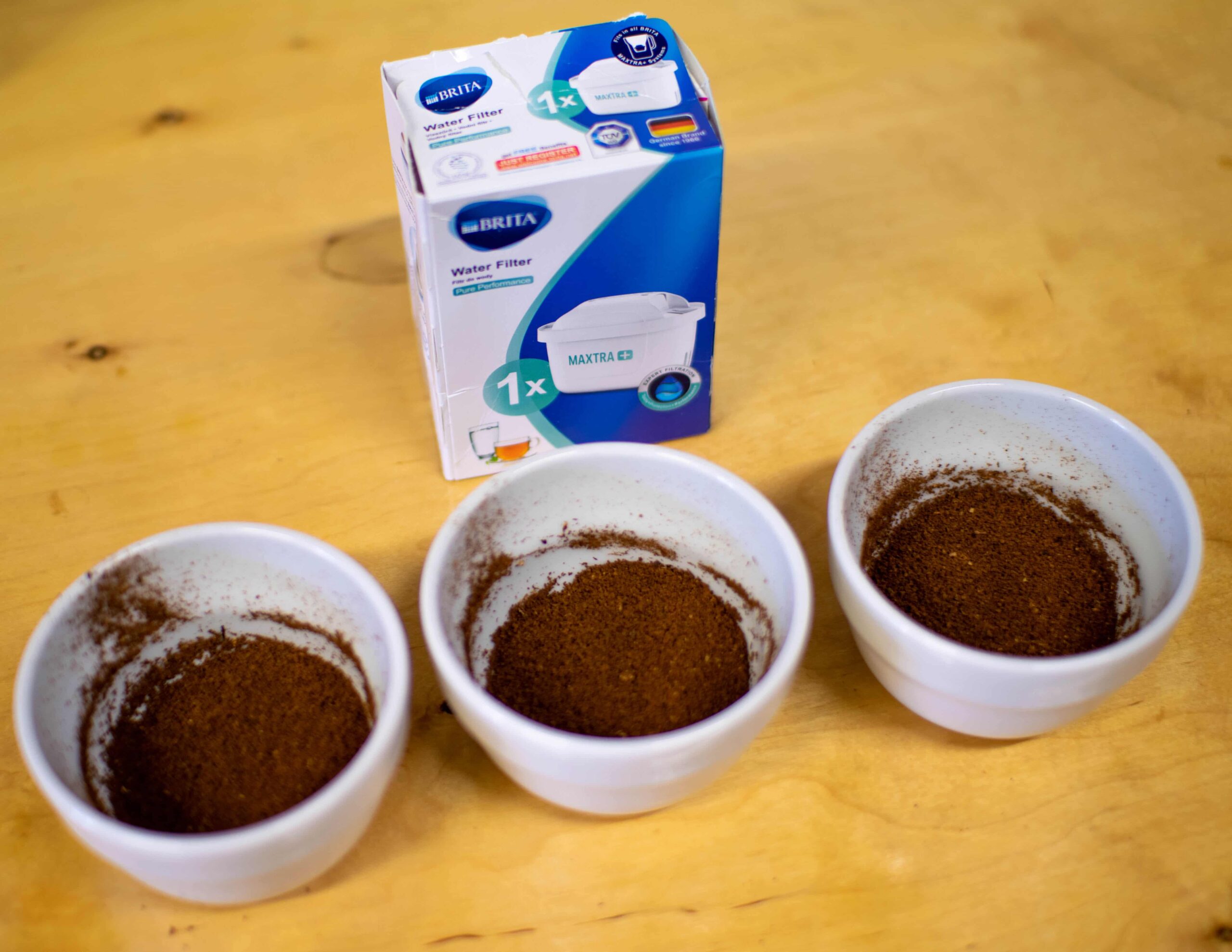
We tested in 4 rounds, in which we first pitted filters from the same manufacturer against each other. We tested using the cupping method and our current novelty served us perfectly as a test coffee Ethiopia Aludra AMO natural.
In the end, not one clear winner emerged from the test, but three.
BWT Mg+ is perfectly suited for naturally processed coffees. The water pleasantly highlighted the acidity in the coffee, the taste was very clean with a clear and easily distinguishable flavor profile. However, the body was emptier.
Brita Maxtra+ PO. We concluded that it is more suitable for preparing espresso. The coffee had a significantly fuller body and still maintained a very clean flavor profile. However, acidity played second fiddle.
Liaca Bi-flux Coffee and tea emerged from the test as the most neutral player. It is therefore best suited for someone who plans to prepare coffee in multiple ways. With both, the coffee will retain its flavor characteristics. However, you need to be careful that the filter is not entirely compatible with Brita or BWT filter jugs.
The remaining filters did not meet our taste standards at all. The coffee tasted very bland and flat.
Conclusion
Water can actually have a huge impact on the quality of your home cup of coffee. Most people are perfectly happy using plain tap water to make coffee, but if you are really serious about your coffee, experimenting with different types of water is definitely worth it and we think you will soon feel a pleasant change.
Erik from Goriffee
Co-founder of the Goriffee roastery. He is in charge of purchasing green coffee, its precise selection and final choice. He regularly visits coffee farms all over the world. He then uses his experience as a QC specialist in quality control and flavor profiling, thanks to which only the best specialty coffee reaches you.
Na ukladanie a/alebo prístup k informáciám o zariadení používame technológie ako cookies. Robíme to s cieľom zlepšiť zážitok z prehliadania a zobrazovať (ne)prispôsobené reklamy. Súhlas s týmito technológiami nám umožní spracovávať údaje, ako je správanie pri prehliadaní alebo jedinečné ID na tejto stránke. Nesúhlas alebo odvolanie súhlasu môže nepriaznivo ovplyvniť určité vlastnosti a funkcie.
Funkčné
Vždy aktívny
Technické uloženie alebo prístup sú nevyhnutne potrebné na legitímny účel umožnenia použitia konkrétnej služby, ktorú si účastník alebo používateľ výslovne vyžiadal, alebo na jediný účel vykonania prenosu komunikácie cez elektronickú komunikačnú sieť.
Predvoľby
Technické uloženie alebo prístup je potrebný na legitímny účel ukladania preferencií, ktoré si účastník alebo používateľ nepožaduje.
Štatistiky
Technické úložisko alebo prístup, ktorý sa používa výlučne na štatistické účely.Technické úložisko alebo prístup, ktorý sa používa výlučne na anonymné štatistické účely. Bez predvolania, dobrovoľného plnenia zo strany vášho poskytovateľa internetových služieb alebo dodatočných záznamov od tretej strany, informácie uložené alebo získané len na tento účel sa zvyčajne nedajú použiť na vašu identifikáciu.
Marketing
Technické úložisko alebo prístup sú potrebné na vytvorenie používateľských profilov na odosielanie reklamy alebo sledovanie používateľa na webovej stránke alebo na viacerých webových stránkach na podobné marketingové účely.