The field of coffee processing is constantly evolving. Recently, innovative coffee producers have been experimenting with anaerobic processing, where coffee is fermented without oxygen. This distinct process results in rare and exotic flavors.
Although anaerobic fermentation is relatively new, aerobic fermentation, where oxygen is included in the process, is common practice. This is standard practice in traditionally processed coffees. Fermentation begins immediately after the coffee is harvested due to the presence of water, sugar, bacteria, and yeast. The sugars and acids in the coffee pulp are then converted into various acids, CO2, ethyl alcohol, and other compounds. Coffee always ferments slightly differently depending on whether it is a washed, natural, or semi-washed process, leading to different flavor variations.
Anaerobic fermentation
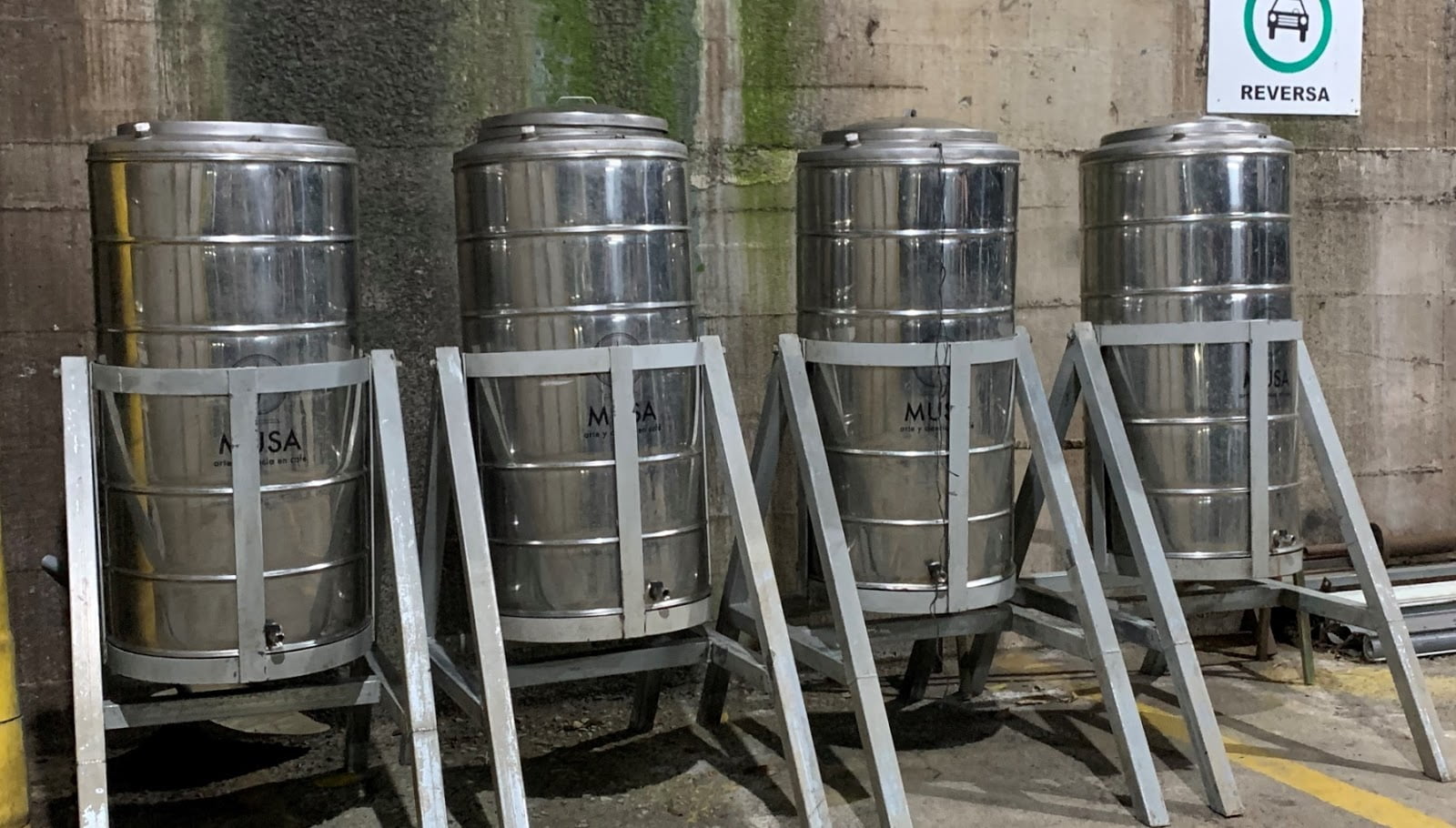
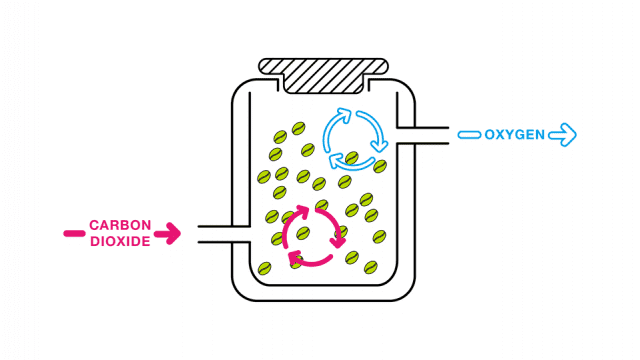
This is a method of fermenting coffee in a sealed tank with a one-way valve, which serves to stop the supply of oxygen to the container. For a better result, the temperature of the tank is also regulated. Unlike the types of fermentation used in traditional coffee processing methods, this is a controlled and purposefully prolonged fermentation. This process can be carried out in specialized tanks, barrels, but also in plastic Grain-pro bags. The important thing is that the coffee is sealed for a certain time without access to air. This can be done before the cherries are pulped or after. In both cases, microorganisms begin to break down glucose molecules, which is a chemical reaction that produces CO2 and heat. This leads to the oxygen being pushed out of the tank through the one-way valve. The bacteria naturally found in the coffee cherry produce enzymes during this process that cause the formation of less complex compounds, such as organic acids and alcohols.
"Fermentation tanks with a one-way valve"
How does anaerobic fermentation affect the final taste of coffee?
Controlling and prolonging coffee fermentation leads to a change in its chemical composition, and thus its organoleptic profile. Fermentation can improve the taste or create different flavor profiles of the same coffee. For example, coffee with a 48-hour fermentation process will not taste the same as coffee with a 100-hour fermentation. Dr. Britta Folmer in The Craft and Science of Coffee says that "removing the pulp through underwater fermentation reportedly increases acidity and aroma and reduces astringency".
On the other hand, too long a fermentation can have the opposite effect, losing acidity, body, and aroma. Coffee producers try to find a balance where flavor and aroma are enhanced without losing the key characteristics of the coffee.
Carbonic maceration
The only difference between anaerobic and carbonic fermentation is that in carbonic maceration, after the coffee cherries are placed in the fermentation tank and the container is sealed, carbon dioxide is injected into the tank. This pushes out all the oxygen. As in anaerobic fermentation, it is important to control temperature, pH, and sugar levels.
How does carbonic maceration affect coffee and why is it used?
The reason for using carbonic maceration instead of anaerobic fermentation is that injecting carbon dioxide into the tank and removing all oxygen slows down the fermentation process. Because there is no oxygen present (so no oxidation occurs), the breakdown of glucose is slower, as is the development of pH. It also makes it easier to control various parameters to obtain different results. Sasa Sestic, World Barista Champion and pioneer in applying this process, claims that by regulating temperature you can regulate both acidity and sweetness. Low temperatures increase acidity, while high temperatures increase sweetness.
As with anaerobic fermentation, the goal is to improve the coffee's characteristics by increasing aroma, improving sweetness and acidity, and obtaining a coffee with a richer flavor structure.
Lactic fermentation
Anaerobic coffee fermentation and carbonic maceration are the two most common processes currently used to enhance the organoleptic properties of coffee, but they are not the only ones.
There are other processes to achieve these results, some in more experimental stages than others. We are talking about lactic fermentation, fermentation with kombucha mushroom, wine yeast, or water kefir. Coffee contains various bacteria that carry out the fermentation process, among which are lactic bacteria. These are the same ones responsible for fermentation processes in dairy products, as well as in fermented vegetables.
In the process of lactic coffee fermentation, conditions are managed by regulating oxygen, for example through the multiplication of these bacteria and others (such as aerobic bacteria). This changes the fermentation process, so it is possible to obtain different results.
Some producers are also experimenting with other processes, trying to introduce bacteria responsible for fermentation in kombucha mushrooms and kefir into the coffee fermentation process. One way to achieve this is to let the coffee cherries ferment in a kombucha or water kefir solution.
Freezing coffee - lyophilization
Another experimental method of coffee processing is freezing. Lyophilization is a process commonly used in food processing. Its goal is to remove water from them and extend their shelf life. The process consists of various steps. First, the temperature of the coffee is lowered, usually to about -40 ° C, which causes the water present in the coffee to freeze. Later, the pressure in the freezer is lowered and the frozen water sublimates. Finally, the water is removed from the coffee. Usually, the temperature of the coffee is increased and the pressure is decreased in the freezer, thereby achieving the target value of residual moisture.
The reason for these experiments with coffee processing is to expand knowledge about its flavors, acidity, sweetness, body in the cup, and to increase the potential of the product that farmers sell. We at Goriffee are always excited when we can try new experiments, as it often happens that they bring new, interesting flavors or their combinations.
Erik from Goriffee
Co-founder of the Goriffee roastery. He is in charge of purchasing green coffee, its precise selection and final choice. He regularly visits coffee farms all over the world. He then uses his experience as a QC specialist in quality control and flavor profiling, thanks to which only the best specialty coffee reaches you.
Na ukladanie a/alebo prístup k informáciám o zariadení používame technológie ako cookies. Robíme to s cieľom zlepšiť zážitok z prehliadania a zobrazovať (ne)prispôsobené reklamy. Súhlas s týmito technológiami nám umožní spracovávať údaje, ako je správanie pri prehliadaní alebo jedinečné ID na tejto stránke. Nesúhlas alebo odvolanie súhlasu môže nepriaznivo ovplyvniť určité vlastnosti a funkcie.
Funkčné
Vždy aktívny
Technické uloženie alebo prístup sú nevyhnutne potrebné na legitímny účel umožnenia použitia konkrétnej služby, ktorú si účastník alebo používateľ výslovne vyžiadal, alebo na jediný účel vykonania prenosu komunikácie cez elektronickú komunikačnú sieť.
Predvoľby
Technické uloženie alebo prístup je potrebný na legitímny účel ukladania preferencií, ktoré si účastník alebo používateľ nepožaduje.
Štatistiky
Technické úložisko alebo prístup, ktorý sa používa výlučne na štatistické účely.Technické úložisko alebo prístup, ktorý sa používa výlučne na anonymné štatistické účely. Bez predvolania, dobrovoľného plnenia zo strany vášho poskytovateľa internetových služieb alebo dodatočných záznamov od tretej strany, informácie uložené alebo získané len na tento účel sa zvyčajne nedajú použiť na vašu identifikáciu.
Marketing
Technické úložisko alebo prístup sú potrebné na vytvorenie používateľských profilov na odosielanie reklamy alebo sledovanie používateľa na webovej stránke alebo na viacerých webových stránkach na podobné marketingové účely.