We tested for you: How to choose an automatic coffee machine for home – complete guide (2026)
Erik Šimšík | 9 December 2025
Choosing an automatic coffee machine for home use is becoming increasingly complex. The offer on the market is huge, technical parameters are often confusing, and the differences between individual brands seem minimal at first glance. In this guide, you will find everything you need to know to choose a coffee machine that exactly matches your habits, space options, budget, and above all, the type coffee beans, which you prefer.
1. The most important question: What kind of coffee do you drink?
Even before you start comparing technical parameters, honestly answer what will actually end up in your cup 90% of the time. You should choose an automatic coffee machine exactly according to your preferences, because a universal machine for everything is often just a set of compromises.
Are you a purist? If you drink exclusively espresso or lungo and like to discover the flavor profile different beans, look for a machine with a high-quality grinder and precise extraction (like the mentioned Jura), not a machine with a huge milk container.
Do you love milk? If a morning without cappuccino is unimaginable for you, invest in a model with a top-notch frothing system and easy cleaning (e.g., Philips LatteGo or higher-end De’Longhi series), where milk foam is a priority.
Choose a device that excels in what you love, not one that does everything just “average”.
Do you drink mainly espresso or americano?
If your priority is the pure and uncompromising taste of black coffee, and especially if you like to buy specialty coffee – you must ignore the “glitz” of dozens of recipes when choosing and focus on the technical heart of the machine. The quality of the extraction unit, the precision of the grinder, and uncompromising temperature stability are decisive.
Key features you must look for:
High-quality grinding burrs: Consistent grinding is the foundation. Look for coffee machines with durable steel or ceramic grinders that “chop” the beans evenly and do not overheat them by friction.
Adjustable water temperature: Different roasting levels require different temperatures. The ability to fine-tune is essential if you want to extract its specific the flavor profile and not burn the delicate fruity notes of lighter beans.
Pre-infusion function: This process moistens the ground coffee even before the actual brewing. The coffee “blooms”, CO2 is released, and the subsequent extraction is more even and fuller.
Ideal models:
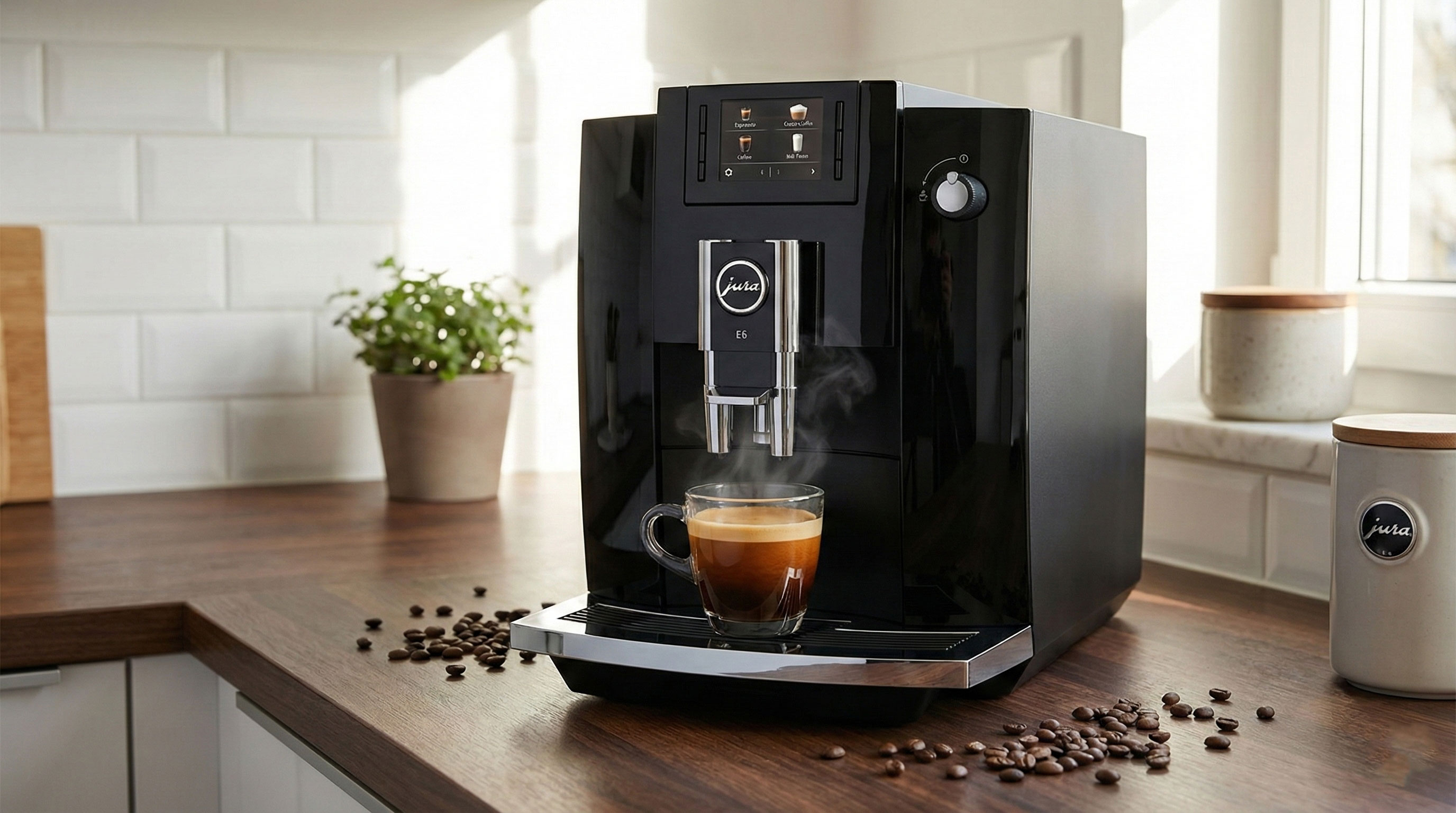
Jura E6 / E8 These Swiss models excel thanks to the innovative Pulse Extraction Process (P.E.P.®), which optimizes the brewing time and guarantees full aroma even with short coffees. They are the ideal choice for more demanding coffee lovers who want to enjoy the potential of their specialty coffee to the fullest at home, with a result comparable to a professional cafe.
De’Longhi Dinamica / Dinamica Plus This series represents the “golden middle way”, combining high reliability with precise consistency in every prepared cup. Thanks to intuitive controls and a wide range of adjustable drinks, they are a great universal solution for households where family members' tastes often differ.
Philips 5400 LatteGo If your priority is maximum comfort and the least possible maintenance worries, this model with the revolutionary LatteGo system will definitely appeal to you. It offers very decent espresso and milk specialties without unnecessary complications, while cleaning the milk system is a matter of just a few seconds under running water.
Do you drink cappuccino, latte, or flat white?
If a morning without cappuccino is unimaginable for you, invest in a model with a top-notch frothing system and easy cleaning. Nothing ruins the taste of morning coffee like the fear of lengthy cleaning of dried milk.
Key features you must look for:
Automatic milk system: Whether a carafe or a tube, the goal is dense microfoam.
Easy maintenance: The coffee machine should be able to clean the milk paths itself with hot steam or water immediately after preparing the drink.
Ideal models:
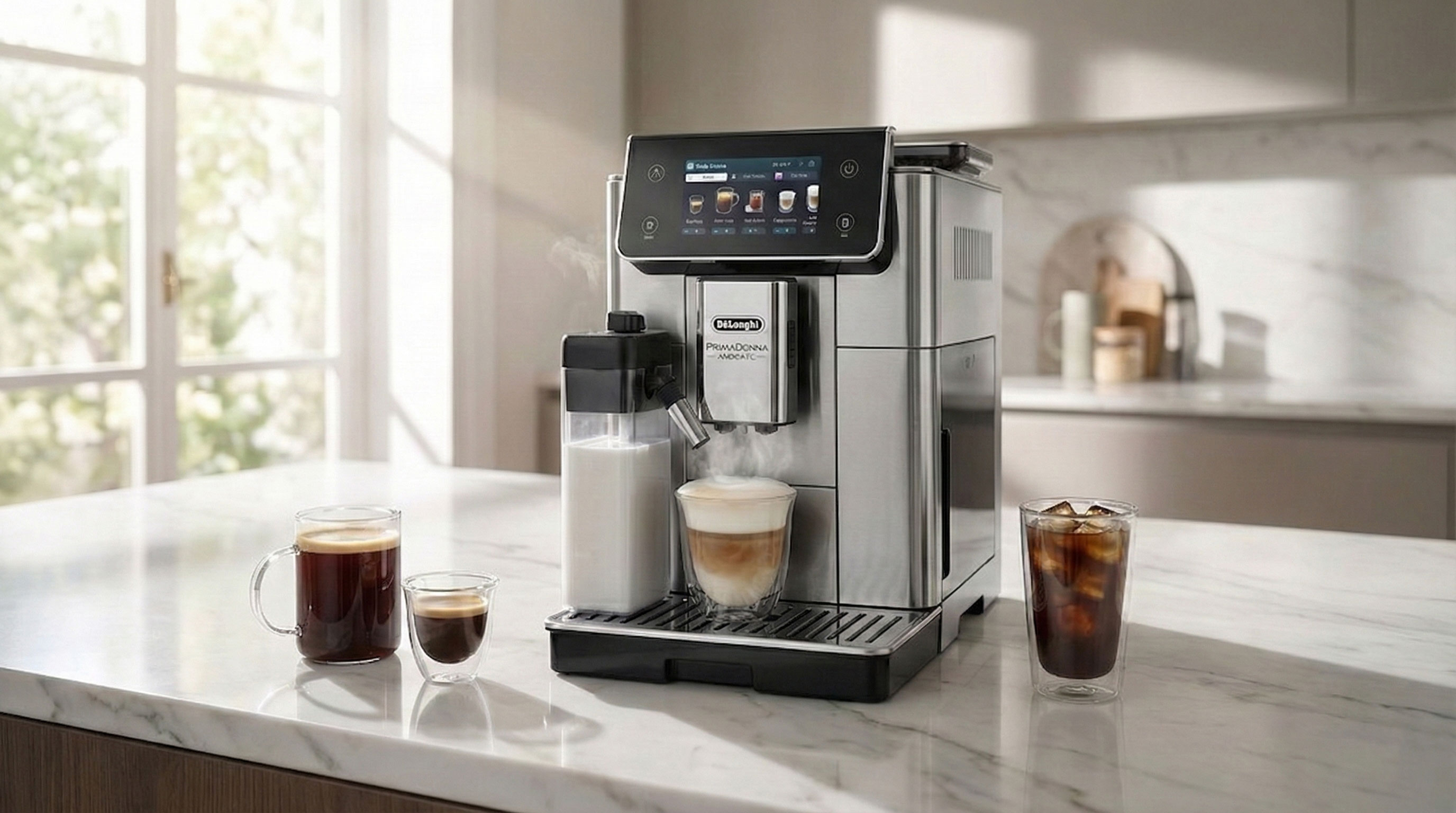
De’Longhi Primadonna This model is the king of home cappuccino thanks to the LatteCrema system, which creates dense and long-lasting foam at the ideal temperature. A big advantage is the thermal carafe, which you simply disconnect after preparation and put the whole thing in the fridge, which significantly simplifies storage. It is the ideal choice for families looking for maximum hygiene and “carefree” preparation of milk specialties.
Jura S8 The Swiss Jura S8 combines precise espresso with a professional nozzle for fine microfoam, thanks to which it prepares a perfect Flat White just like from a cafe. Control via the large touch display is intuitive and visually attractive. We recommend this machine to demanding coffee lovers who want from their specialty coffee to extract maximum flavor even in milk drinks.
Siemens EQ700 If you are looking for a quiet machine for an open kitchen, the Siemens EQ700 is the clear winner thanks to its soundproofed grinder. Through the large smartphone-like display, you can easily choose not only classics but also international recipes via the CoffeeWorld function. Automatic cleaning of the milk paths with steam after every drink is a matter of course, which will save you a lot of time on maintenance.
For large families and home offices: When the coffee machine doesn't stop
If your coffee machine “rattles” from morning to evening at home, or you share it with colleagues in a small home office, small design pieces will quickly bore you. With a high frequency of preparation, there is nothing more annoying than having to add water or empty the waste container before every second coffee. Here, the efficiency and “endurance” of the machine decide.
Key features for high load:
Generous containers: Look for a water tank with a volume of at least 1.8 liters and a bean hopper that holds at least 250g – 300g of coffee (for example, a whole small package specialty coffee at once). It will save you constantly running to the tap.
Fast heating (Thermoblock): If several of you meet in the kitchen in the morning, no one wants to wait minutes for the machine to heat up. Modern thermoblocks are ready for action almost immediately.
Acoustic comfort: If you get up first, you certainly don't want to wake up the whole house with the sound of crushing coffee beans. Focus on models with a soundproofed grinder (often labeled as “silent” or “super silent”).
Recommended model:
De’Longhi Primadonna Soul This coffee machine is a real “workhorse” built for higher loads. Its biggest advantage is the above-standard bean hopper (up to 500 g), thanks to which you don't have to refill coffee every morning. It features technology Bean Adapt, which automatically adjusts the grinding coarseness and water temperature according to the specific type of your specialty coffee, so it ensures consistent taste even when preparing dozens of cups a day.
2. Key parameters: What to focus on and what is just marketing?
Many manufacturers state parameters that are often just marketing gimmicks with no real impact on the final taste. Here is an explanation of what is truly important when choosing.
Grinder: The heart of the coffee machine
The quality of the grind directly affects the taste of your coffee. Experts from the world of specialty coffee, such as James Hoffmann, have long pointed out that the grinder is more important than the coffee machine itself. If the grind is poor, even the best machine will not prepare a good espresso.
Steel conical grinder: The most common choice in high-quality automatics. It is durable, precise, and offers the best price/performance ratio.
Ceramic grinder: Its advantage is quieter operation and the fact that it overheats less during long grinding (common in brands like Philips/Saeco).
Flat burr grinder: You will find it more in cheaper models. It often does not achieve the necessary grind consistency for high-quality espresso, so we do not recommend it.
Pressure and extraction
In advertisements, you will often encounter dazzling figures like “15 bars” or even “19 bars”. The reality, however, is that for preparing real espresso, the ideal pressure is around 9 bars. Higher pump pressure in automatics only serves to compensate for resistance in the system, not for better extraction.
Instead of chasing bars, focus on extraction technologies:
Jura P.E.P: Pulse extraction, which ensures a fuller taste even with short coffees.
Siemens iAroma: Intelligent heating and pressure system for a balanced taste.
De’Longhi LatteCrema: System optimized for the perfect texture of milk drinks.
Milk system
If you like cappuccino, this point is crucial. There are three main approaches:
Automatic carafe: The most convenient choice. You press a button and the machine does everything for you. Many have an automatic self-cleaning function.
LatteGo (Philips): Innovative system without tubes. It consists of only two parts, which you rinse under running water in a few seconds. In terms of hygiene, it is the clear winner.
Steam wand: Requires manual skills when frothing milk in a pitcher, but it is easier to maintain and coffee machines with it are usually cheaper.
Maintenance and cleaning
Neglected maintenance is the most common reason why even high-quality specialty coffee tastes bad after a while. Therefore, watch out for these three things when choosing:
Removable brewing unit: It is important that you can remove it and manually rinse it of coffee residues, thus preventing mold formation.
Descaling: How easily is the cleaning cycle started?
Water filters: Is the coffee machine compatible with filters (e.g., Brita / AquaClean)? Using filtered water not only improves the taste but significantly extends the life of the machine.
3. Selection according to kitchen and household size
There is nothing worse than when a coffee machine takes up your entire worktop, or conversely, when you have to add water every third coffee. The size of the coffee machine should reflect not only the physical space in the kitchen but also how many coffees you actually prepare daily.
Small kitchens and “single” households
If you are fighting for every centimeter or drink coffee only occasionally, you don't need a huge machine. Look for models that are narrow (slim designs) and do not take up the depth of the counter.
Verdict: These models are compact, but can still prepare a high-quality drink. The price for small dimensions is smaller water and waste tanks, which, however, does not matter at all with 1 – 2 coffees a day.
Medium households (2 – 4 people)
Here we are looking for the “golden mean” – a machine that doesn't get in the way, but has enough capacity so that you don't spend all your time operating the device and adding water during Sunday breakfast.
Verdict: They offer the best ratio between size and comfort. The water and bean hoppers are dimensioned to handle the all-day routine of a normal family without constant refilling.
Demanding households and small offices
If your coffee machine “runs” from morning to evening, you need a “heavyweight”. In this category, it's about efficiency – large tanks mean less downtime.
Verdict: Machines built for higher loads and top quality. They have large water tanks (often over 2 liters) and coffee hoppers (can handle larger packages), fast heating, and a more robust construction that will last years of intensive use.
4. Most common mistakes when buying and using
Avoid these mistakes, which can cost you unnecessary money and ruin the taste experience, even if you have high-quality coffee at home.
Buying a suspiciously cheap model
Saving in the wrong place doesn't pay off. Coffee machines from “supermarket promotions” often have unstable water temperature and poor-quality grinders that crush the beans rather than grind them. The result is then coffee that is either under-extracted (unpleasantly sour) or burnt (bitter and astringent), regardless of what beans you use.
Choosing unsuitable roasting (Light Roast)
This is the most common mistake when switching to specialty coffee. Light roast, which is intended for filter coffee, does not belong in an automatic coffee machine. The automatic has a short extraction time, during which it cannot extract sweetness from light beans, and the result will be extremely sour.
Solution: For an automatic, always look for Medium Roast or Full City Roast, where acidity is suppressed and the sweetness and body of the coffee stand out.
Ignoring service costs
An automatic coffee machine is a complex device with moving parts that wear out over time. Before buying, find out the availability of authorized service and the price of spare parts for the given brand. Cheap “no-name” brands often end up in the trash after the first breakdown because they cannot be repaired, while brands like Jura, De’Longhi, or Nivona have long-term service support.
Underestimating noise
If you have a kitchen connected to the living room (open space), a noisy grinder can be very disturbing for other family members in the morning. Ceramic grinders or premium soundproofed steel grinders (e.g., in higher Siemens or Jura series) are significantly quieter. Do not underestimate the decibel figure in the technical description.
5. Recommended brands for the year 2025/2026
The coffee machine market is constantly evolving, but some models hold their position long-term thanks to reliability and output quality. Based on our long-term tests and feedback from hundreds of customers, we have selected the current winners in key categories:
Best price/quality ratio: Philips 5400 LatteGo & De’Longhi Dinamica
In this category, we are looking for machines that offer the most bang for your buck.
Philips 5400 LatteGo: Wins thanks to incredibly easy operation and a rich offer of 12 drinks. It is the ideal choice for a family where everyone drinks something different.
De’Longhi Dinamica: Offers a more robust construction and slightly higher temperature stability during espresso extraction, which you will appreciate with darker roasted coffee.
Best espresso: Jura E6 / E8 & Siemens EQ700
If the pure taste of black coffee is a priority for you and you want to get the maximum from your specialty coffee to get the maximum.
Jura E6 / E8: Thanks to the P.E.P.® process (pulse extraction), these machines can prepare espresso with a body and crema that comes closest to lever coffee machines.
Siemens EQ700: Excels thanks to the ceramic grinder and the iAroma system, which maintains constant temperature and pressure throughout the extraction time, thereby highlighting the flavor profile beans.
Best cappuccino: De’Longhi Primadonna & Jura S8
For those looking for the perfect milk texture.
De’Longhi Primadonna: The LatteCrema system creates dense, rich foam that holds its shape. Ideal for classic cappuccino and latte macchiato.
Jura S8: This model is a master in preparing fine “microfoam”, which is essential for modern drinks like Flat White. The milk is velvety and blends perfectly with the coffee.
Easiest cleaning: Philips LatteGo
Unrivaled winner: If you hate cleaning tubes and disassembling complex systems, the LatteGo system has no competition. The carafe consists of only two plastic parts without any hidden pipes. Just rinse them under running water – done in 15 seconds.
6. Bonus: What coffee to use in an automatic coffee machine?
Even the most expensive coffee machine won't make good espresso from a bad ingredient. At Goriffee, we have several profiles that are perfect for automatics. Our customers have most favored coffees with lower acidity and a full body for automatics.
For owners of automatics, we especially recommend:
Profile: Distinctive body, bittersweet taste, thick crema. Ideal for those who like stronger coffee.
If you want to be sure you never run out of coffee, check out our value packages for espresso, which we have put together especially for regular coffee drinkers. Also, don't forget regular maintenance and cleaning products, which will keep your machine in shape.
Erik from Goriffee
Co-founder of the Goriffee roastery. He is in charge of purchasing green coffee, its precise selection and final choice. He regularly visits coffee farms all over the world. He then uses his experience as a QC specialist in quality control and flavor profiling, thanks to which only the best specialty coffee reaches you.
Na ukladanie a/alebo prístup k informáciám o zariadení používame technológie ako cookies. Robíme to s cieľom zlepšiť zážitok z prehliadania a zobrazovať (ne)prispôsobené reklamy. Súhlas s týmito technológiami nám umožní spracovávať údaje, ako je správanie pri prehliadaní alebo jedinečné ID na tejto stránke. Nesúhlas alebo odvolanie súhlasu môže nepriaznivo ovplyvniť určité vlastnosti a funkcie.
Funkčné
Vždy aktívny
Technické uloženie alebo prístup sú nevyhnutne potrebné na legitímny účel umožnenia použitia konkrétnej služby, ktorú si účastník alebo používateľ výslovne vyžiadal, alebo na jediný účel vykonania prenosu komunikácie cez elektronickú komunikačnú sieť.
Predvoľby
Technické uloženie alebo prístup je potrebný na legitímny účel ukladania preferencií, ktoré si účastník alebo používateľ nepožaduje.
Štatistiky
Technické úložisko alebo prístup, ktorý sa používa výlučne na štatistické účely.Technické úložisko alebo prístup, ktorý sa používa výlučne na anonymné štatistické účely. Bez predvolania, dobrovoľného plnenia zo strany vášho poskytovateľa internetových služieb alebo dodatočných záznamov od tretej strany, informácie uložené alebo získané len na tento účel sa zvyčajne nedajú použiť na vašu identifikáciu.
Marketing
Technické úložisko alebo prístup sú potrebné na vytvorenie používateľských profilov na odosielanie reklamy alebo sledovanie používateľa na webovej stránke alebo na viacerých webových stránkach na podobné marketingové účely.