


What is specialty coffee? More than just 80 points (Complete guide 2026)

Peter from Goriffee | December 28, 2025
Maybe you've heard the term in a cafe, or seen it on the packaging of our coffee. Specialty coffee (in English specialty coffee). For some, it's just a marketing label, for us at Goriffee, it's a binding quality standard.
But what exactly does it mean? Is "Premium" coffee the same thing? And can specialty coffee be bad if you prepare it poorly?
In this article, we'll look beneath the surface. We'll explain the technical definitions, but also why specialty coffee is more about people than just beans.
When does coffee become specialty?
Many brands use words like "Gourmet", "Premium", or "Excellence". These words sound nice, but in the coffee world, they mean nothing – they are just marketing names.
Specialty coffee is, however, a technical term. For coffee to be labeled as such, it must pass a strict physical and sensory evaluation according to the standards of SCA (Specialty Coffee Association).
It must meet two conditions:
- Physical inspection: A 350 g sample of green coffee must not contain any primary defects (e.g., black or moldy beans) and a maximum of 5 secondary defects.
- Cupping (tasting): A certified Q-grader (taster) must assign the coffee a score of at least 80 out of 100 points.
What does this mean in practice?
- Under 80 points (Commodity coffee): Coffee you commonly find in supermarkets. It is often roasted dark to hide flavor defects (woodiness, earthiness, mold).
- 80+ points (Specialty coffee): Coffee with a clean taste, where you can recognize the character of the region (terroir) – notes of fruit, flowers, chocolate, or spices.
Specialty coffee is a chain that must not be broken
One of the most important things to realize (and which is often discussed among baristas) is the fact that specialty coffee is just potential.
A green bean can have a rating of 90 points on the farm. But if one of these things happens, you will no longer have specialty coffee in your cup:
- Bad roasting: If the roaster burns the bean, it kills its unique profile. Only bitterness remains.
- Bad preparation: Even the best Ethiopia can be ruined by a dirty coffee machine, bad water, or incorrect grinding.
That's why at Goriffee we say that specialty coffee is about collaboration. The farmer works hard to grow the perfect bean. We must roast it sensitively. And you (or the barista) must prepare it correctly. Only then is the experience complete.
It all starts on the farm: Why hand-picking is crucial
Maybe you've seen huge machines in vacation photos shaking coffee trees in Brazil and everything falling to the ground. That is the reality of commodity coffee. The machine does not discriminate. It takes ripe red cherries, but also green (unripe), overripe (black), and along with them branches, leaves, and insects.
With specialty coffee, the process is diametrically different. It's hard work.
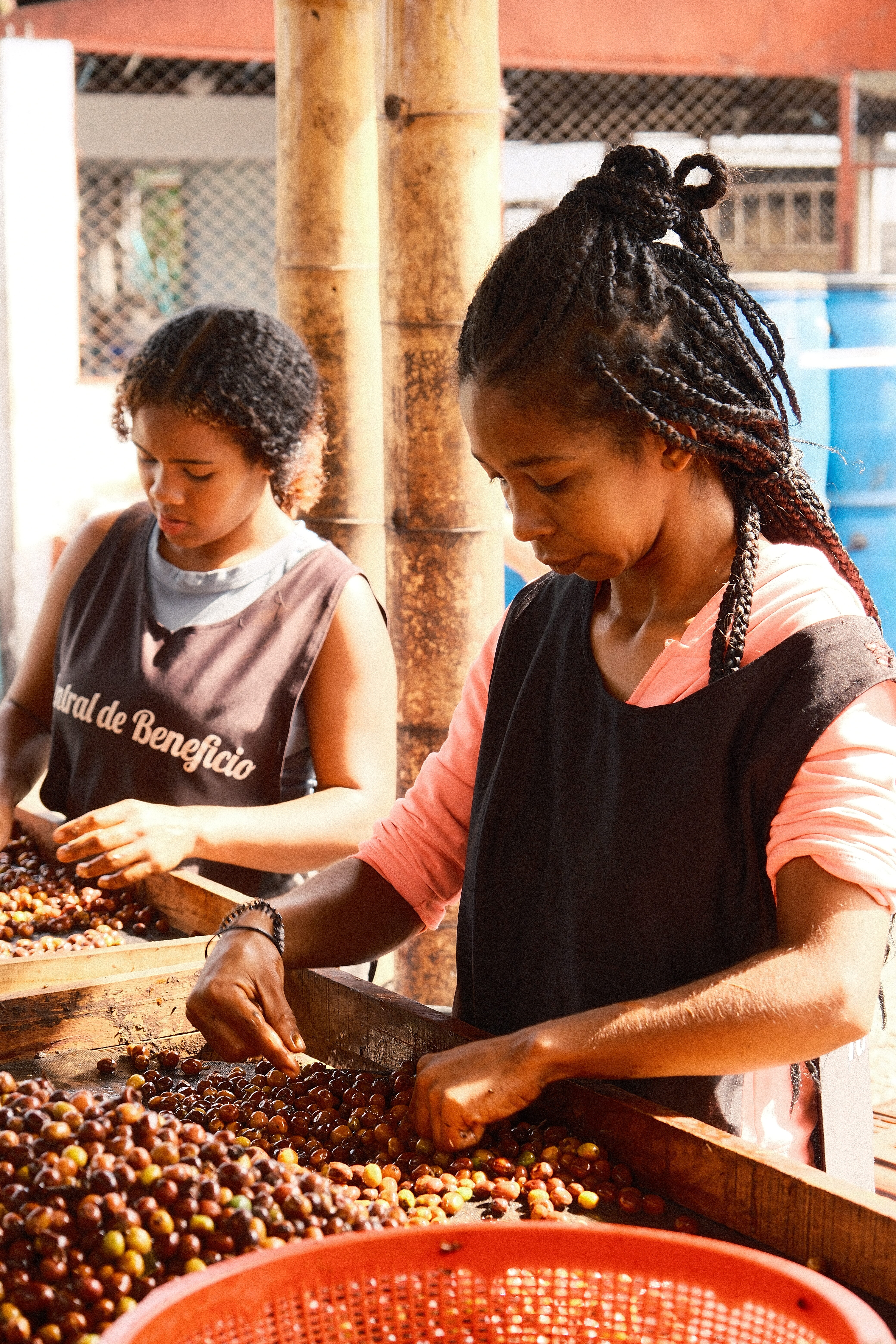
Selective Picking Specialty coffee is harvested almost exclusively by hand. Pickers go to the same plot several times during the season. Why? Because coffee cherries do not ripen all at once. The picker's job is to pick only those cherries that are in perfect ripeness (red, yellow, or purple – depending on the variety).
Why is this important?
- Ripe cherry = Sugar. Only a fully ripe fruit contains enough sugars, which turn into those amazing fruity and caramel flavors during roasting.
- Unripe cherry = Astringency. If green cherries get into the harvest, the coffee will taste astringent, harsh, and grassy.
Double check (What you might have seen) The work doesn't end even after the harvest. You often witness on farms how farmers pour the collected cherries onto so-called African beds (raised nets) or into water tanks.
That's where the second phase of sorting begins. People lean over the crop and precisely pick out everything that doesn't belong there.
- They remove "floaters" (light, empty beans that float on the surface).
- They pick out damaged pieces that were overlooked during the harvest.
It is exactly this obsession with detail even before the coffee begins to be processed that is the reason why specialty coffee costs more. You are paying for the time and human energy that guarantees you won't find defects in the package.
Commodity vs. Specialty Coffee: A clear comparison
So you can see the difference at first glance:
| Property | Commodity coffee | Specialty coffee |
| Origin | Often unknown ("Blend of EU and non-EU countries") | Exactly known (specific farm, region) |
| Harvest | Often machine (takes unripe and rotten cherries too) | Hand-picked (selective picking of only ripe cherries) |
| Roasting | Dark, oily beans (hides defects) | Light to medium (highlights character) |
| Defects | Allowed to varying degrees | Zero tolerance for primary defects |
| Taste | Bitter, uniform, "coffee-like" | Complex, fruity, sweet, acidic |
Frequently asked questions and myths (From discussions with baristas)
We have collected questions that trouble not only beginners but also frequently appear in professional discussions.
Is coffee in chains like Starbucks specialty?
Technically speaking, large chains usually buy coffee that just falls short of the specialty quality threshold, or hovers at its lower limit. Their business model requires the coffee to taste the same in New York and in Bratislava. This is achieved by dark roasting, which suppress the uniqueness of the bean and create a uniform bitter taste. Specialty coffee is the opposite of uniformity – it is about celebrating differences.
Why is specialty coffee sometimes sour?
Coffee is a fruit. High-quality Arabica has a natural fruitiness, which we professionally call acidity. It is not that unpleasant tartness you know from vinegar. It is a freshness, like that of a ripe apple or orange. If you prefer flavors without acidity, look for coffees from Brazil in our offer or those with a "chocolate and nuts" flavor profile. More about acidity in coffee read on our blog.
What are "Quakers"?
You may have seen beans in a bag of cheaper coffee beans that are much lighter, even yellow, after roasting. Baristas call them "quakers". They are unripe beans that lack sugar and therefore do not caramelize during roasting. They taste like paper or peanuts. You shouldn't find them in specialty coffee – they are considered a defect that is removed by manual sorting before export.
Is specialty coffee more expensive?
Yes, but the question is: by how much? The price per kilogram can be double, but when converted to a single cup, we are talking about a difference of cents. For this small difference, however, you get a product where you know the farmer was paid fairly and you are not drinking moldy or defective beans.
Do you want to find out if you can really tell the difference? The best introduction to the world of specialty coffee is our a coffee subscription. Every month we select the most interesting beans for you to test how diverse the taste of coffee can be.

