


From bean selection to the cup in your home: An interview with Jakub, the roaster from Goriffee

Peter from Goriffee | 16. January 2026
Jakub Jandík is not just the guy standing by the roaster at Goriffee. He is the Slovak Cup Tasting Champion (2019), former co-founder of the cult Mad Drop, and a person with a decade of experience in the coffee world. In this interview, we looked inside his head – at how he thinks about taste, his responsibility towards farmers, and whether perfect coffee exists.
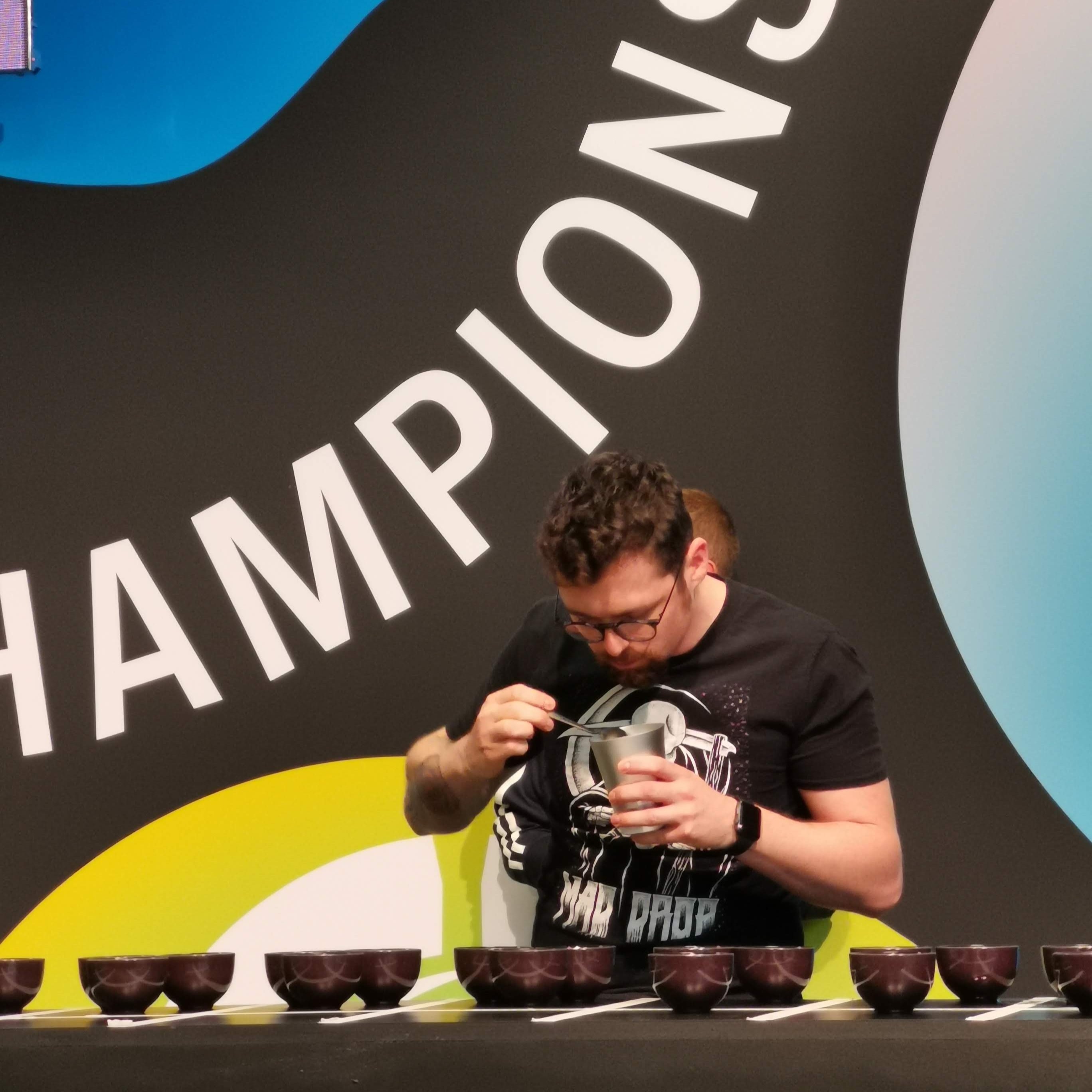
The title of Slovak Cup Tasting Champion (2019) proves you have an exceptional taste memory. Does this ability help you "imagine" the taste of coffee during roasting, when you only see curves on the monitor, or is the final cupping sometimes a surprise for you too?
It's complicated and not entirely straightforward. There are coffees that taste very good even if the roasting doesn't go exactly as planned, but certain things can be saved. But there are also coffees that surprise you, and unfortunately, it happens in a negative sense too. Sometimes the raw material that arrives at our roastery no longer tastes as clean and juicy as the sample we selected months before. Time, storage method, and transport are important factors in preserving taste.
Goriffee builds on real relationships with farmers and regularly visits them directly on the farms. When you pour coffee from a person you've met personally into the roaster, do you feel a greater psychological responsibility 'not to mess it up'?
Probably yes. I felt it especially now when we had Indonesias from Hendra. I was a guest at his home, and when we roasted that coffee, memories surfaced and I more or less took it as my own – with the feeling that thanks to me it got into our production. But I try to approach every coffee equally responsibly. Having been to the farm, I can more realistically imagine the conditions in which these people live and work to produce these taste experiences for us.
How does the process of finding that "chosen" profile work? Do you strive for absolute transparency of the terroir, or do you consciously adapt the profile to the customer?
This process starts already during sample selection, when we know exactly whether the coffee will go for filter, espresso, or into a blend. Thanks to rich experience and the fact that we have mapped various regions and processing types, we can quite quickly determine the right roasting style. My general philosophy is that coffee should be well-balanced, fruity, sweet, and with a clean finish (clean cup). I want to roast coffee so that it is accessible to everyone – from a professional to a grandma in the kitchen who just pours water over it. So it's a combination of respect for how the coffee grew, with the goal of "making it good" for the end customer.
You've been in the coffee world for over a decade. When you compare what we considered 'top coffee' in the past with what you roast today – have we moved forward?
We have definitely moved forward. Technologies are more accessible and of higher quality. As for tastes, I remember when Šimon competed in 2019, they had crazy 300-hour fermented coffees that were extremely intense. I don't see that as often in samples today, the scene has smoothed out a bit. But producers are always trying to invent something new. Coffee changes over time – today there is much greater diversity than in my beginnings, when classic "naturals" dominated and there wasn't such a large selection.
What is the specific "Goriffee DNA" by which someone would recognize your work in a blind test?
If I had to define our signature, it's coffee that is "well-developed", has pronounced sweetness, fruitiness, and a clean profile. We pride ourselves on the fact that our specialty coffee is not just for a select few, but that it is understandable for everyone. We try to select diverse and fresh coffees for our offer that will satisfy every palate. So if someone tastes perfect balance and clarity in the cup, without needing high-end technology to prepare it, that's exactly what I strive for at Goriffee. In short: for a person to truly enjoy that coffee.
Most people only see the successful packages on the shelf. But what happens in the roastery when a batch doesn't go as planned? Is it hard for a roaster to admit a mistake?
Of course, every failed batch personally annoys and angers you. It's a great shame for the raw material, especially when it comes to expensive specialty coffee. Fortunately, thanks to years of experience and the fact that we already have various regions and processes well "mapped", we can significantly eliminate the error rate. But it happens – I'm not a machine and sometimes technology intervenes too. For example, once during roasting the fuses blew and the whole "batch" had to go, excuse me, to hell. In such moments it's important to admit the mistake, although, thank God, it doesn't happen often.
Mad Drop was energetic and rebellious, while roasting is a solitary activity. Have you found your "zen" in roasting, or do you sometimes miss the hustle and bustle of a cafe?
Working in a cafe is undoubtedly more dynamic, faster, and full of communication with people. Working by the roaster is indeed more solitary, but I actually enjoy it quite a bit. In a way, it's similar to extracting espresso for me – I have to weigh everything, check the values, and then hand the result over to the customer. Sometimes I miss that cafe buzz, but then it's enough for me to go to an event, make a few cappuccinos and espressos, and that completely fulfills me for now.
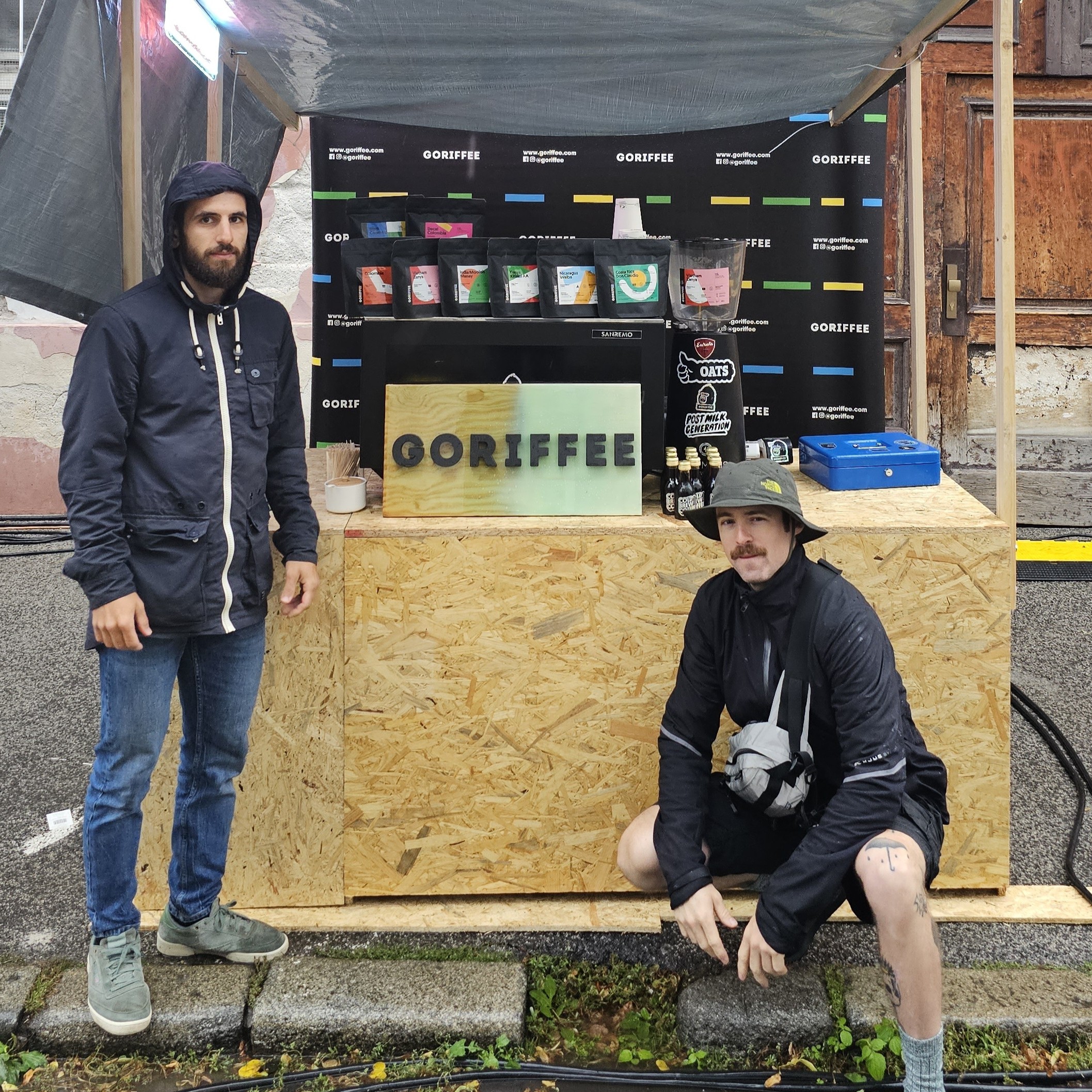
You stood behind the bar for many years. How does this experience influence you now that you are a roaster? Does it help you "tailor" the coffee so that baristas can work with it better?
Definitely yes. My philosophy is to roast coffee so that people at home or in a cafe don't have to "struggle" with it. I don't want specialty coffee to be only for a narrow group of people with high-end technologies. Even though it's specialty coffee, it shouldn't be just for a select few. I want a barista to be able to prepare it perfectly, but also a grandma in the kitchen with an ordinary grinder. My experience from the bar tells me that coffee must be well-developed and balanced, so that it is accessible and tasty for everyone who drinks it.
The market today is full of experimental fermentations. How do you resolve the dilemma between "hype" coffees and those that show the true face of the variety?
As the Wu-Tang Clan sings: "Cash rules everything around me". At the end of the day, numbers are important, so we produce coffees that are in demand. But we have a wide portfolio, so we can afford to have fun co-ferments that are simple and fruity, and at the same time beautiful, clean washed Kenyas or Geshas. Our goal is not to make just one type of "hype" coffee, but to offer quality and freshness, which will satisfy every palate – from lovers of experiments to fans of classic terroir purity.
Is there such a thing as "perfectly roasted coffee", or is it just a myth? Which coffee from the last year are you most proud of?
The concept of perfection is very subjective. For me, the ideal is a coffee that has sweetness, fruitiness, and that aforementioned "clean cup" (clean finish) that pleases you in the cup. If I had to highlight something recently, I am very satisfied with how the Indonesias from Hendra turned out. Whether it was carbonic maceration or anaerobic processing, I really enjoyed these coffees and I am proud of how we managed to process them. These are exactly the taste experiences for which I do this job.
Currently, we also offer a bargain bundle 3+1 and we are selling out the last remnants of the popular Christmas Brewing blend.

