


How is decaf coffee made? (And why doesn't our coffee have a chemical taste?)

Johny | February 13, 2026
"I'd rather die than give up decaf coffee." Or: "Decaf coffee is like non-alcoholic beer – it makes no sense."
We've been hearing these statements in the coffee world for years. And honestly? We understood them for a long time. Decaffeinated coffee had a decades-long reputation as a beverage drunk only out of necessity. It tasted bland, papery, sometimes even chemical, and had nothing in common with the pleasure of excellent coffee.
However, the world of specialty coffee has evolved along with technology. I dare say that in a blind tasting, you probably wouldn't know you were drinking decaf coffee.
How is this possible? It depends on how gently (or less gently) the caffeine is extracted from the beans.
Chemistry versus nature: Why did decaf coffee have a bad name?
Most cheap types of coffee are decaffeinated in the cheapest way – using aggressive chemical solvents (for example, methylene chloride was often used).
The process is simple: the beans are soaked, the chemicals bind the caffeine, and then the beans are washed. The problem is that these solvents are aggressive. Along with the caffeine, they also "take away" the oils, sugar, and aromatic compounds from the beans that make up their character. The result is empty beans, which are then roasted to give them at least some flavor.
For us at Goriffee, this was not the right way. If we sell decaf coffee under our brand, it must primarily be high-quality, specialty coffee.
The power of sugarcane
The coffee you will find with us has gone through a process called Sugarcane (or E.A. Decaffeination). This is a method that uses the natural conditions of the coffee's country of origin – in our case, often Colombia.
Instead of synthetic chemicals, ethyl acetate is used. It sounds scary, but in reality, it is a natural substance created by the fermentation of sugarcane molasses. This process is brilliant in that it is selective. Ethyl acetate has a natural property of binding to caffeine molecules, while other important components of the coffee beans remain almost untouched.
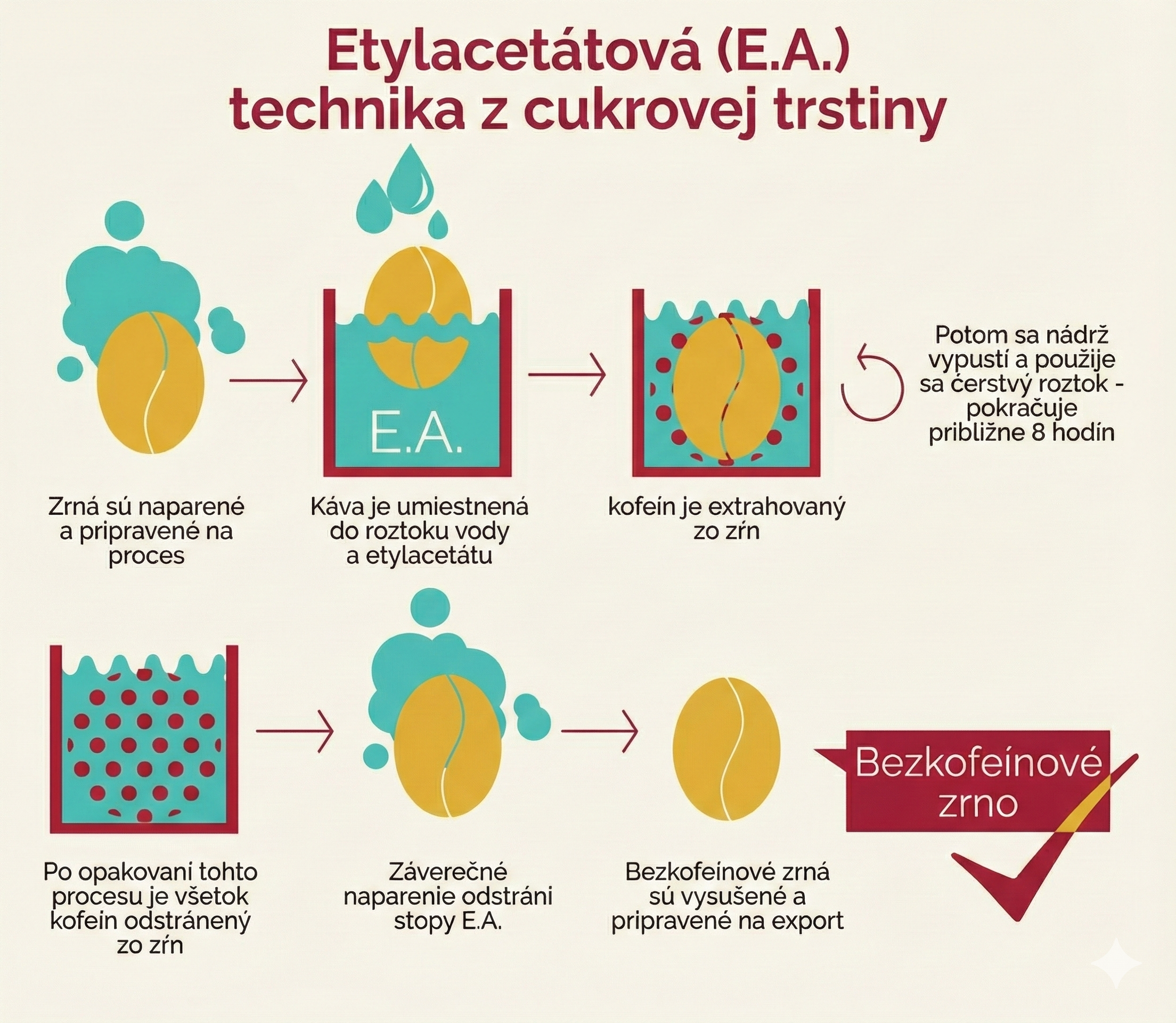
The whole process can be simply illustrated as follows:
- Steaming: The green beans are carefully steamed with water vapor to open their pores and increase their volume.
- Bath: The bean is immersed in a solution of water and natural ethyl acetate from sugarcane.
- Extraction: The solution flows through the beans and extracts the caffeine from them. This step is repeated until at least 97% of the caffeine is removed.
- Cleaning: After removing the caffeine, the beans are steamed again to remove any remaining ethyl acetate.
- Drying: The coffee is dried to its original moisture content and coated with a protective wax (e.g., beeswax or plant wax) to maintain its stability.
The result? A preserved flavor profile
Since we did not treat the beans with aggressive chemicals and high temperatures, they retained their basic properties. The cell of the bean is slightly more sensitive (which is why decaf coffee is roasted more gently), but the taste remained unchanged.
When you taste our decaf coffee, you won't feel any papery aftertaste. You will enjoy its sweetness, mild acidity, and full aroma. Whether with notes of milk chocolate, nuts, or dried fruit – the flavor profile remains true to the region the coffee comes from.
Who is this coffee for?
It's not just coffee for pregnant women or people with high blood pressure. It is a coffee for everyone who appreciates the taste of specialty coffee but also wants to sleep well.
It is an ideal choice if:
- Do you fancy an espresso at six in the evening?
- You want to treat yourself to a third or fourth cup a day, but don't want to get distracted.
- You are trying to reduce your caffeine intake but don't want to give up your ritual.
If you have despised decaf coffee until now, I recommend giving it a chance. You might find that what you appreciated most about coffee wasn't the caffeine, but its taste.

